Articles
Articles, questions and guides on pet care.



Myxomatosis in Rabbits
Myxomatosis is a viral disease in pet and wild rabbits. In the US, this contagious disease is mainly located on the West Coast. Cottontail rabbits are the normal host of the virus and it rarely…

Rabbit Hemorrhagic Disease
Rabbit hemorrhagic disease virus (RHDV), also known as viral hemorrhagic disease (VHD) is a contagious viral disease caused by a calicivirus. This virus mainly affects European pet rabbits. However,…

Online Veterinarians
What is an online vet and how can they help me? Virtual telehealth has become more useful and prominent in our society than ever before. Online vets can discuss your pet’s health with you in the…

My Dog Won't Stop Licking His Paws - Help!
Is your dog licking his paws incessantly? So obsessively that they seem to have lost interest in everything else around them? What does this mean, and is there a treatment for it? Keep reading to…

Abnormal Nail Color in Dogs
There could be many causes for nail discoloration in dogs. From fungus to allergies and yeast infections, the origins may vary. Discoloration may even be red, brown, or black, but it could also be…

What causes abnormal nail growth in dogs?
If you’ve noticed something a little bit unusual about your dog's nails, or they’re licking their paws or chewing at a nail more than they usually do, there may be a problem with your dog's nails.…
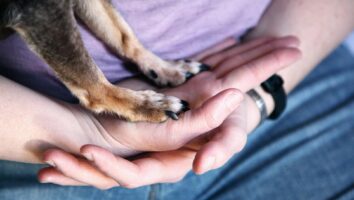
Broken Nails in Dogs: Causes, Symptoms, and Treatment
Dogs' nails need to be clipped or trimmed regularly. Sometimes, the nail can chip, tear or break, unintentionally while cutting it. If your dog's nail splits, breaks or tears, it can start to bleed…

Maltese Dog Guide: Everything You Need to Know
Little dogs typically have big personalities, and that’s no coincidence. When your only job description is to be a charming companion to the humans in your life, it pays to have pizzazz. And when it…

Sarcoptic Mange (Scabies) in Dogs
Sarcoptic mange, also called scabies, is a highly contagious skin disease that affects dogs. The disease is caused by the tiny, microscopic (meaning they cannot be seen with the naked eye) Sarcoptes…

Ringworm in Rabbits
Rabbits can get ringworm, a fungal infection, just like other mammals. Rabbits are more prone to getting infections with Trichophyton mentagrophytes, but can also get Microsporum canis infections.…

Canine Infectious Respiratory Disease Complex (CIRDC)
Canine Infectious Respiratory Disease Complex (CIRDC) is seen frequently, as it easily and quickly spreads from dog to dog. This occurs most commonly in crowded circumstances such as boarding,…

Treating and Preventing Fleas in Ferrets
Ferrets can get fleas just like dogs and cats. Since most ferrets are housed exclusively indoors in the US, it’s usually the dogs or cats bringing fleas inside and exposing the ferret. All pets in…

How to Safely Trim Your Pet's Nails
Since it’s likely that your pets don’t live in the wild, their nails probably won’t wear down naturally. Therefore, as owners, we must trim them to avoid problems with walking and moving around, as…

Common Causes of Hair Loss in Dogs
Hair loss, medically known as alopecia, is the most common dermatological problem observed in dogs. By definition, alopecia is the complete or partial lack of hair in regions of the body where it…

What causes dandruff in dogs?
Skin problems are the most commonly reported health issues in dogs. Apart from the amount of hair, a dog’s skin anatomy and function are pretty much the same as with humans. This means that dogs…

How to Bathe Your Dog at Home
One way to keep your dog’s coat and skin healthy is by keeping it clean. To a certain extent, a dog has its own mechanisms to keep its fur and skin clean and protect itself from various elements.…

Is it ok to shave your dog's fur?
During hot, summer days when the ambient temperature is barely tolerable for us humans, we often imagine that our dogs, with all their thick hair, are probably feeling even worse. The tendency is…

Symptoms and Treatment for Ruptured Eardrums in Dogs
The ear of dogs is divided into three parts - the outer ear, the middle ear, and the inner ear. Between the outer ear and the middle ear is a thin membrane called the tympanic membrane or eardrum.…