Dog



What are dog food allergies?
Everybody has heard of food allergies by now or knows people who have them. Dogs can also get food allergies, but they like to do them differently than people. Read on to learn how to recognise them.

Lungworm infection in dogs
Lungworm (Angiostrongylus vasorum) is a life-threatening disease of dogs. The number of cases in the UK over the last few years seems to be rising. Our vet explains what signs you should look out…

Colitis in dogs - a common cause of diarrhoea
Colitis in dogs means that the patient is suffering from inflammation of the large intestine (colon). Many dogs will suffer from colitis at one stage in their lives and this is also a common puppy…

Crate training for puppies
Puppies are often crate trained as part of an introduction to a new household. This can be an effective way of helping puppies to feel safe, secure and to prevent injury overnight. However, things…

Common infectious causes of diarrhoea in dogs and puppies
There are many infectious causes of diarrhoea in dogs and puppies, and this is sometimes associated with other symptoms such as vomiting, lethargy and loss of appetite. A common step in the…

Help! My dog gets travel sickness
Travel sickness, also called car or motion sickness, can affect pets as much as humans. Any form of travel can trigger travel sickness- dogs may shake, drool, yawn excessively, vomit and in some…

Long-term diarrhoea in dogs and cats
Loose stools can become an ongoing problem in both dogs and cats. In medical terms, changes to the consistency of stools is termed chronic diarrhoea when it has been present for 2 weeks or more.…

Changes in the colour of your pet’s poo?
Stool colour is an excellent indicator of intestinal health. Many different conditions can have an impact on stool colour and consistency so sometimes these changes are the first indication of a…

How to do an elimination diet food trial for dogs
Elimination diet food trials are done in dogs both to diagnose and treat various food intolerances or allergies. Read our article to learn how to do one successfully!

Megaoesophagus in dogs
Megaoesophagus is a condition where the muscular food pipe, which connects the throat to the stomach (the oesophagus), does not function normally. Food and saliva cannot move into the stomach, as…

Intussusception in dogs and cats
Intussusception is an uncommon problem that can occur in the intestine where one part of the gut slides into the next part in a telescoping action. This can cause a blockage or particle blockage…
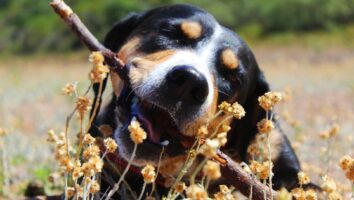
Help! My pet has eaten….? Foreign bodies in dogs and cats
It is very common for dogs to eat things they shouldn’t, and sometimes this can get them into trouble. It is less common but still possible in cats, who tend to be more careful about what they…

Flatulence (farting) in dogs and cats
All animals produce gas in their gastrointestinal tract. It is normally expelled by the body either in the forms of farting from the bottom, or burping (eructation) from the mouth. Some flatulence…
Help! Why won’t my dog eat?
Dogs are clever! They will often not eat if they feel nauseous or they have vomited recently. If they have vomited, they are more likely to eat after being fasted for a short time: 2 to 3 hours for…

EPI (Exocrine Pancreatic Insufficiency) in dogs and cats
Exocrine Pancreatic Insufficiency (EPI) is a condition which can affect both dogs and cats, but is more commonly seen in dogs. An insufficient amount of digestive enzymes are made in the gut. These…

Intestinal lymphangiectasia in dogs
The lymphatic system is a series of branching vessels, called lacteals, which carry lymph fluid around the body. Lymph fluid carries cells of the immune system and plays an important role in the…

Feeding a puppy
We all know that puppies are not just small dogs and they have different dietary requirements. A puppy’s diet should be tailored to help with growth and development to help build strong bones, teeth…

Gastric ulcers and gastritis in dogs
There are many reasons why your dog might be sick or not eat well. Gastritis is common but usually easily treatable. The stomach contains strong gastric acid, which is important in the breakdown of…