Dog



Immune-Mediated Thrombocytopenia
Immune-Mediated Thrombocytopenia, often abbreviated IMT, IMTP, or ITP, is an autoimmune condition where the body starts to destroy the platelets. When the platelet level drops too low because more…

Salmon Poisoning in Dogs
Salmon Poisoning is often a fatal disease in dogs. It is caused by a rickettsial infection, Neorickettsia helminthoeca. Salmon poisoning has not been reported in cats but can affect dogs, bears, and…

Caring for Pets with Pneumonia
Pneumonia is an inflammation of the lower respiratory tract (mainly the lungs) that can cause breathing difficulties. This leads to a lack of oxygen in the blood. Both dogs and cats are susceptible…

Portosystemic Shunts in Dogs
Portosystemic shunts, or PSS, are vessels that bypass the liver allowing the blood that is draining from the stomach, intestines, spleen, and pancreas to go directly into circulation without getting…

Histoplasmosis in Dogs and Cats
Histoplasmosis is a rare fungal disease that can be found not only in dogs and cats but in all mammals. It is caused by the fungus Histoplasma capsulatum which can be found worldwide. However, in…

Aspergillosis in Dogs and Cats
Aspergillosis is a fungus that is very common in the environment and grows on old food, organic matter, and in the soil. There are over 180 species of aspergillosis and they rarely cause disease…

Online Veterinarians
What is an online vet and how can they help me? Virtual telehealth has become more useful and prominent in our society than ever before. Online vets can discuss your pet’s health with you in the…

Hookworms in Dog and Cats
Hookworms are common intestinal parasites of dogs and cats, and certain hookworm species can also infect people. Hookworms are small parasites, usually only 1-2 cm long, that attach with teeth to…

Roundworms in Dogs and Cats
Roundworms are a common intestinal parasite seen in both dogs and cats. Puppies and kittens are often born with a developing roundworm infection that can lead to stunted growth if not treated…

Abnormal Nail Color in Dogs
There could be many causes for nail discoloration in dogs. From fungus to allergies and yeast infections, the origins may vary. Discoloration may even be red, brown, or black, but it could also be…

What causes abnormal nail growth in dogs?
If you’ve noticed something a little bit unusual about your dog's nails, or they’re licking their paws or chewing at a nail more than they usually do, there may be a problem with your dog's nails.…
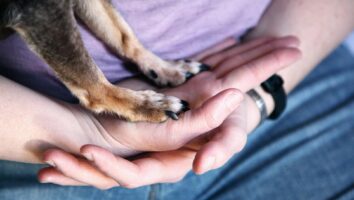
Broken Nails in Dogs: Causes, Symptoms, and Treatment
Dogs' nails need to be clipped or trimmed regularly. Sometimes, the nail can chip, tear or break, unintentionally while cutting it. If your dog's nail splits, breaks or tears, it can start to bleed…

Maltese Dog Guide: Everything You Need to Know
Little dogs typically have big personalities, and that’s no coincidence. When your only job description is to be a charming companion to the humans in your life, it pays to have pizzazz. And when it…

Sarcoptic Mange (Scabies) in Dogs
Sarcoptic mange, also called scabies, is a highly contagious skin disease that affects dogs. The disease is caused by the tiny, microscopic (meaning they cannot be seen with the naked eye) Sarcoptes…

Canine Infectious Respiratory Disease Complex (CIRDC)
Canine Infectious Respiratory Disease Complex (CIRDC) is seen frequently, as it easily and quickly spreads from dog to dog. This occurs most commonly in crowded circumstances such as boarding,…

How to Safely Trim Your Pet's Nails
Since it’s likely that your pets don’t live in the wild, their nails probably won’t wear down naturally. Therefore, as owners, we must trim them to avoid problems with walking and moving around, as…

Common Causes of Hair Loss in Dogs
Hair loss, medically known as alopecia, is the most common dermatological problem observed in dogs. By definition, alopecia is the complete or partial lack of hair in regions of the body where it…

What causes dandruff in dogs?
Skin problems are the most commonly reported health issues in dogs. Apart from the amount of hair, a dog’s skin anatomy and function are pretty much the same as with humans. This means that dogs…