Dog



Poisonous Plants for Dogs and Cats: Oleander
Oleanders are beautiful flowering plants that can grow incredibly large. Oleanders are commonly used in landscaping along fences for privacy and for their beauty. Unfortunately, the Oleander plant…

Poisonous Plants for Dogs and Cats: Azalea
Azaleas, also called Rosebay or Rhododendron, are common plants in outdoor landscaping. Despite their beauty, they can be toxic if eaten by dogs, cats, rabbits, reptiles, pigs, horses, and goats (to…

Poisonous Plants for Dogs and Cats: Dieffenbachia
Dieffenbachia is a genus of perennial, tropical, flowering plants that are widely sold and commonly kept as houseplants due to their tolerance of shade and their pretty and varied appearances. If…

Help! Why is my dog vomiting blood?
Hematemesis, or bloody vomit, can be a severe clinical sign of many different diseases or other traumas. If you see any blood in your dog’s vomit, contact a veterinarian immediately. We’ve compiled…

Coffee and Other Caffeine Dangers for Dogs
Products containing caffeine are in essentially every household. But that doesn’t mean they’re safe foods for dogs to eat. In this article, we’ll explain what types of caffeinated foods your pet…

Poisonous Plants for Dogs and Cats: Lantana
Lantana (Lantana camara), also called Shrub Verbena, Yellow Sage, and Red Sage, is a perennial flowering plant that is commonly used in landscaping. It grows wild in tropical regions of the US and…
How do I take my dog’s temperature?
If you want to be a well-equipped pet owner for times of illness, one of the easiest and most essential skills to master is learning how to take your pet’s temperature. Just like in people, a high…
Poisonous Plants for Dogs and Cats: Cyclamen
Cyclamen, also called Sowbread, are small, flowering plants often used in landscaping over the winter and spring seasons. They come with red, white, and pink flower varieties. Continue reading to…

Can Dogs and Cats Eat Gingerbread Cookies?
During the holidays, many of us enjoy baking to get into the spirit. Gingerbread cookies are a classic for Christmas, as well as gingerbread houses. Or maybe you’re not the baking type, and you…
Causes and Symptoms of Bloat in Dogs
Bloat is a generic term for distention of the abdomen. This is sometimes used interchangeably with a disease called “Gastric Dilatation and Volvulus,” but a bloated abdomen does not always indicate…
Diagnosing and Treating Environmental Allergies in Dogs
Has your dog recently been diagnosed with allergies? Atopy, or “allergic dermatitis” is one of the most commonly diagnosed causes of itching in dogs. Read on the learn about why dog’s develop atopy,…

How to Find the Right Dog Trainer
It’s a common assumption that all dog training involves a group class where everyone stands in a circle and learns “sit” and “stay” with their dogs. And while this can be one type of training, there…

Lumps and Bumps on Dogs and Cats
Could my pet have an infection? Allergic reaction? Splinter? Tumor? The answer is YES to all of the above or something else… In this article, we’ll touch briefly on some causes of lumps and bumps or…

5 Myths About Your Dog’s Digestive Tract
You might think that your dog’s gastrointestinal tract is a lot like yours. But what types of food are actually safe for dogs to eat? And do they really digest food the same way we do? Keep reading…
The Dog Digestive System: Anatomy and Functions
Ever wonder how your dog’s digestive system works? Are dogs strictly meat-eaters? Read on to learn about the digestive system, how it works, and the best way to keep your dog’s digestive tract…
How to Give Your Dog Oral Medication
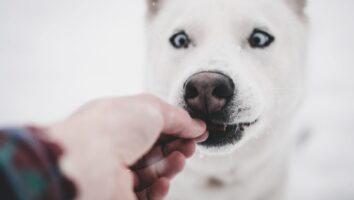
Giving a dog his medicine is rarely easy, but knowing the proper procedure and what to expect can make the process more pleasant — for you and your dog. To start, prepare all the medications that…

What causes abnormal nail growth in dogs?
If you’ve noticed something a little bit unusual about your dog's nails, or they’re licking their paws or chewing at a nail more than they usually do, there may be a problem with your dog's nails.…

Common Causes of Hair Loss in Dogs
Hair loss, medically known as alopecia, is the most common dermatological problem observed in dogs. By definition, alopecia is the complete or partial lack of hair in regions of the body where it…